What Is Shielding in Cable Assemblies?
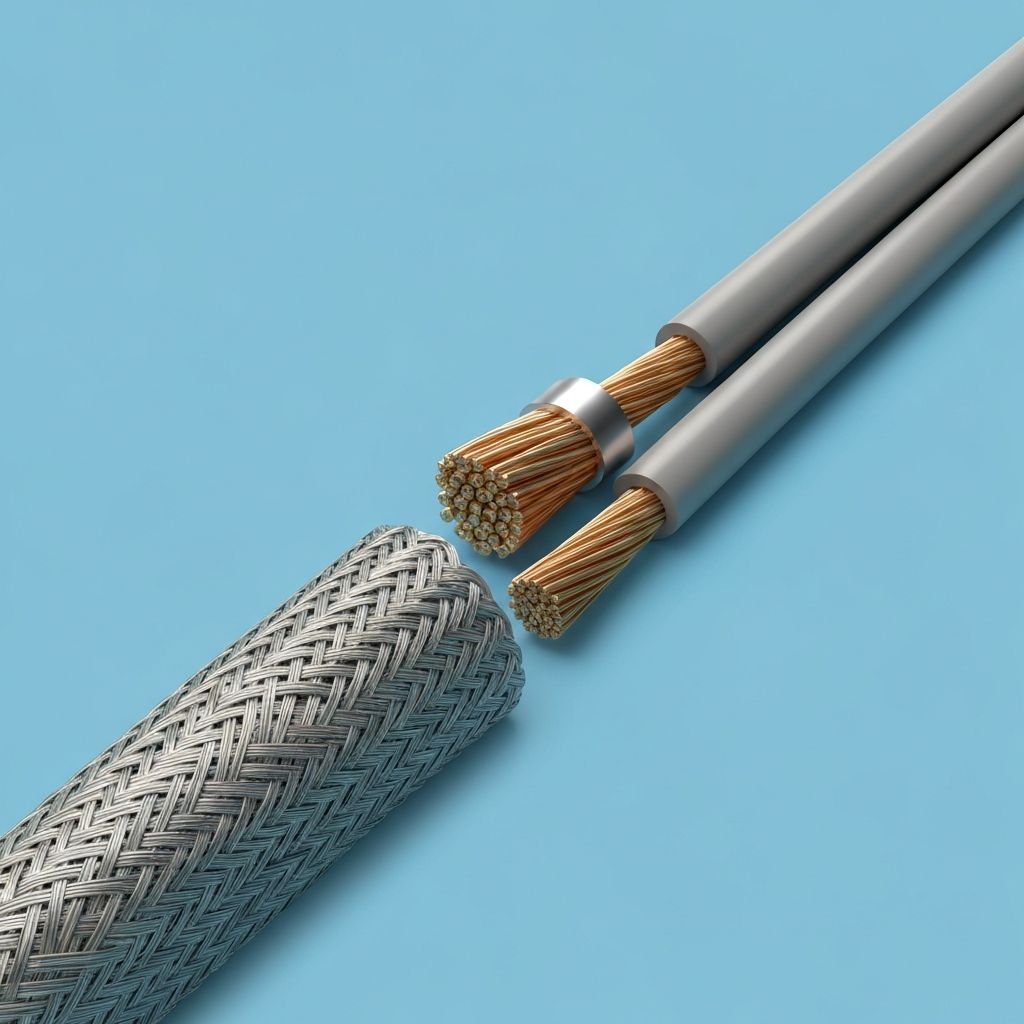
Shielding is a conductive layer (foil, braid, or a combination) that surrounds the inner conductors of a cable. Its main purpose is to protect signals from external electromagnetic interference (EMI) and to reduce emissions from the cable itself.
Unshielded Cables: When They Are Enough
Unshielded cables are simpler and more economical. They are suitable when:
- Signal frequencies are low
- Cable runs are short
- Electrical noise in the environment is minimal
- Regulatory EMI requirements are not very strict
Shielded Cables: When You Need Extra Protection
Shielded cables are preferred for:
- High-speed data lines (Ethernet, serial, fieldbus)
- Sensitive analog signals (sensors, instrumentation)
- Industrial environments with motors, VFDs, and welders
- Compliance with EMC regulations
Types of Shielding
- Foil shields – good for high-frequency noise, lightweight, cost-effective.
- Braid shields – better mechanical strength, good low-frequency noise rejection.
- Combination shields – foil + braid for wider spectrum protection.
Pros and Cons at a Glance
Shielded Cables
- Pros: Better EMI protection, improved signal integrity, required in noisy environments.
- Cons: Higher cost, slightly more difficult to terminate, larger cable diameter.
Unshielded Cables
- Pros: Lower cost, easier handling and termination, smaller size.
- Cons: More vulnerable to electrical noise and emissions.
How to Choose for Your Application
Consider the following factors:
- Signal type and speed
- Distance and routing (near power cables or motors?)
- Regulatory requirements (CE, FCC, industry standards)
- Budget vs. risk of communication issues
Conclusion
The choice between shielded and unshielded cable assemblies is not one-size-fits-all. By understanding your electrical environment and performance requirements, you can make an informed decision that balances cost, reliability, and compliance.